
A crowded casino scene looks easy from the audience side. Put down some tables, bring in a few hundred extras, switch on enough lights and let everyone make noise.
The crew sees something else entirely.
A real casino is a working business. There are customers, security rules and very little room for a camera track cutting across the floor. Sometimes productions shoot on location anyway. Quite often, building the casino is easier.
A fake floor gives the crew room to work
The problem with a real casino becomes obvious as soon as you add cameras.
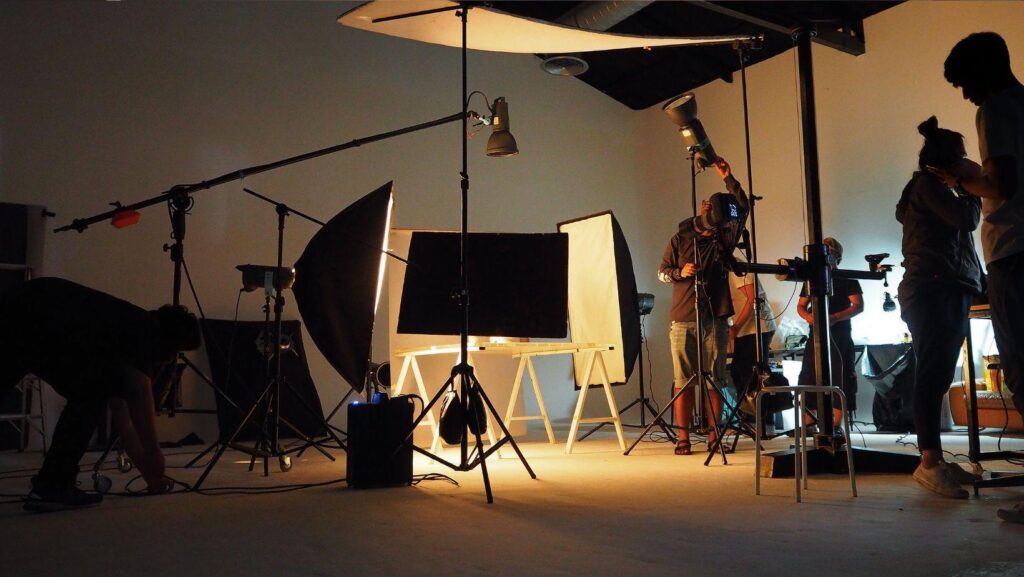
The crew needs space for lighting, tracks and people who aren't meant to appear in the shot. A scene may be repeated several times from different angles. Background performers have to return to roughly the same places between takes.
Actual customers are rather bad at continuity.
For Ballad of a Small Player, some casino-floor filming in Macau took place between roughly 1 a.m. and 4 a.m. The crew had to be out on time. The production also used virtual-production work for material that couldn't be handled the same way on location.
A purpose-built set doesn't have opening hours.
The tables only need to fool the camera
Casino furniture is surprisingly unforgiving.
A roulette wheel that turns badly looks wrong. Chips need to move properly across felt. Cards have to land where the shot expects them to land. Slot machine lights and screen have to repeat the same action over and over.
For Ocean's Thirteen, one of the most massive casino heist movies to date, Philip Messina's team built a large casino on a soundstage. It had 32 gaming tables, working slot machines and thousands of chips carrying the fictional casino's branding. Much of the lighting was built into the set as well.
Ozark ran into a different problem with its riverboat casino. The production tested real slot machines, then built more than 140 of its own because the genuine machines weren't practical enough for filming. Some of the replicas could flash, spin or print receipts on cue.
A prop doesn't need to survive ten years on a casino floor. It does need to behave properly on take seven.
A crowd can still look empty
Filling the background with extras isn't quite enough.
Someone has to deal cards. Players need to move chips without looking as though they learned how five minutes earlier. Other people cross behind the main action, stop at a table or look elsewhere at the right moment.
That last part is easy to get wrong. Put enough inexperienced extras in one room and somebody will eventually stare straight into the camera.
Some productions use people who already know the games. The Cage, for example, brought in supporting actors with croupier experience. Molly's Game used experienced poker players for some overhead shots where only their hands appeared.
Hands matter more than you'd think in a poker scene.
Casino lighting isn't automatically good film lighting
Real casinos have plenty of lights. That doesn't mean a cinematographer can simply turn up and start shooting.
Faces still need to look right. Tables have to remain readable from several angles. Large production lamps sitting beside a blackjack table would rather give the game away.
So the set itself can become part of the lighting rig.
On Ocean's Thirteen, fixtures above the casino floor hid film lights inside decorative fittings. That gave cameras more freedom to move around without constantly revealing equipment.
The audience sees casino lighting. The crew sees places to hide lamps.
Sound makes the floor feel bigger
The camera rarely shows the whole room.
Sound can fill in whatever sits beyond the edge of the frame. Slot-machine tones, chips on felt, cards hitting tables and bits of distant conversation can make a limited set feel much larger.
Those sounds don't all have to come from the original shoot either. Editors can build the room afterwards and change how busy it feels from one scene to the next.
A quiet conversation at a table and a packed Saturday-night floor may use some of the same physical space.
Continuity gets messy very quickly
Casino scenes are full of small things that move.
A chip stack gets shorter. Cards change position. Somebody puts down a drink. Then the scene is shot again from another angle and all of it needs to be where the edit expects it.
Crowds make that worse. There may be twenty separate bits of background action happening while the main actors talk.
One badly placed chip probably won't kill a movie. It can still make two cuts look strangely wrong when they're placed back to back.
Sometimes rebuilding the real thing is simpler
Productions have recreated actual casino spaces even when the original location still existed.
For Lucky You, the filmmakers wanted the Bellagio poker room as it had looked in 2003. By the time filming started, the room had been renovated. The production rebuilt it on a Los Angeles soundstage and even bought some furniture and fixtures from the old room.
Once you build the space yourself, every doorway and table can go where the shot needs it.
That is very different from the digital casino environment at YYY Casino, where the whole experience sits behind a screen. A movie casino has to create the physical mess: depth, bodies moving through frame, chips in the right places and enough background activity to make the room feel alive.
Then somebody calls cut, and half the tables have to be reset again.