
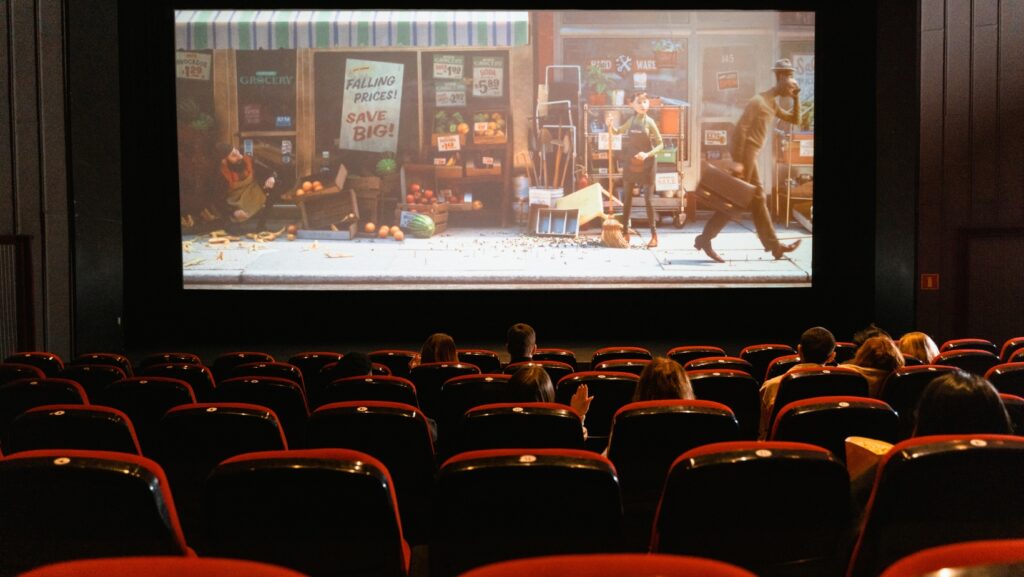
Recently, cinema can be a not only an upgraded way to represent stories but also a very abstract story-type. Directors today are experimenting adapting shock into their screen-plays just like more recent entertainment channels like slot wallet changed user interaction with digital visualisation by providing content on flow integration. Good (and surprising) plot twists aren’t just the audience’s big surprise; they’re about making every frame before that twist shatter, in light of what you just revealed.
The Rise of the Dramatic Twist
A twist used to be just a “whodunnit” reveal, in the early days of cinema. Today, however, the narrative structure is much more flexible. Audiences, too, are savvier and sharper than ever. This demands tremendous ingenuity with foreshadowing from writers. But a good twist has to feel earned, which is to say, in the instant that you remember it (or hear someone explain how obvious it was) all of the clues were there from the start, hidden-in-plain-sight.
The Psychological Shift in Parasite
Bong Joon-ho’s opus is a graduate-level course in tonal shifting. What starts as a dark comedy about an impoverished family devising various schemes to worm their way into a wealthy household gradually transforms into claustrophobic thriller. The reveal that a man lived in the basement raised the stakes exponentially.
Key takeaway points about this twist:
- It shines a light on the literal and figurative “underclass” of society.
- This shift takes place precisely midway through the film, casting it in a whole new genre.
- It is a harsh indictment of social mobility and class warfare.
The Nonlinear Deception of Arrival
Denis Villeneuve now manages to make our knowledge of time into a weapon. Initially we believe that what we are seeing in the movie is flashbacks of the protagonist’s past. The “unbelievable” twist is that these really are “flash-forwards.”
The aliens’ language is nonlinear; that’s a reflection of the film’s narrative structure. The twist also adds a deeper layer of grief and choice to the lead character’s journey. The audience is asked, through this event and the world converging upon Ellie in a literal sense, to recast what we know as “free will” within the insatiable context of the narrative.
Shutter Island: The Identity Crisis
It is a fountain of psychological turns and though it’s more than 10 years old, they do not age. Martin Scorsese uses visual clues like the way the guards act, and that a “partner” history is absent to show that Teddy Daniels isn’t who he believes himself but to be.
In the Lighthouse complex Behind the Lighthouse lighthouse Which means a place of “light” teachings. Teddy’s inability to process reality is a tragic exploration of trauma. Did he achieve “cured” status or just conclude that peace was his best bet?
The Grim Truth of The Truman Show
But its age in the social media era is stunning. The moment of Truman crashing into the “wall” of sky is one of the most iconic in cinema.
Observations on the film’s impact:
- It predicted, too, the rise of reality television and the erosion of privacy.
- The set design was intentionally “too perfect” to unsettling.
- The emotional linchpin is Truman’s desire for authentic human contact.
Everything Everywhere All At Once Multiverse Mayhem
This movie establishes a twist is not just one moment; it’s the overall logic of the universe. The reveal that Joy is Jobu Tupaki and her motivation nihilism grounds the chaotic action with a poignant emotional core.
The analysis of the narrative structure of the film:
The verse-jumping grants infinite versatility to its visual artistry. The evolution is less plot mechanic than emotional twist. It grapples with the notion that nothing matters and thus everything matters.
Subverting Expectations in Get Out
Jordan Peele used horror to explore race in a way that felt fresh and ominous. The revelation of the “Sunken Place” and what the Armitage family was really up to were an unsettling turn that made the supernatural threats seem grounded in earthly worries.
Get Out twist highlights:
“The teaspoon”is a symbol of psychological locking. Every piece of dialogue during the party foreshadows it. It reinvented the “social thriller” for a generation of moviegoers.
Blade Runner 2049: The Existential Dread
In an age of “chosen ones,” Blade Runner 2049 can only bait and switch. We’re led to believe that K is a miracle child, but he just turns out to be another distraction an average blade runner in the wrong place at the right time.
Why this twist is spectacular:
It upends the “hero’s journey” cliché familiar from blockbuster film. It walks the talk that it’s not who you are by birth but what you do. Roger Deakins’s visual storytelling deepens the isolation of the reveal.
Why We Crave the Unexpected
We attend films for provocation, but more so surprise. A well-executed twist sticks in your mind long after the credits have rolled. It provokes conversation, creates fan theories and demands a second watch. As narrative technology, the “unbelievable” is going to get more tricksy too as storytelling itself matures.